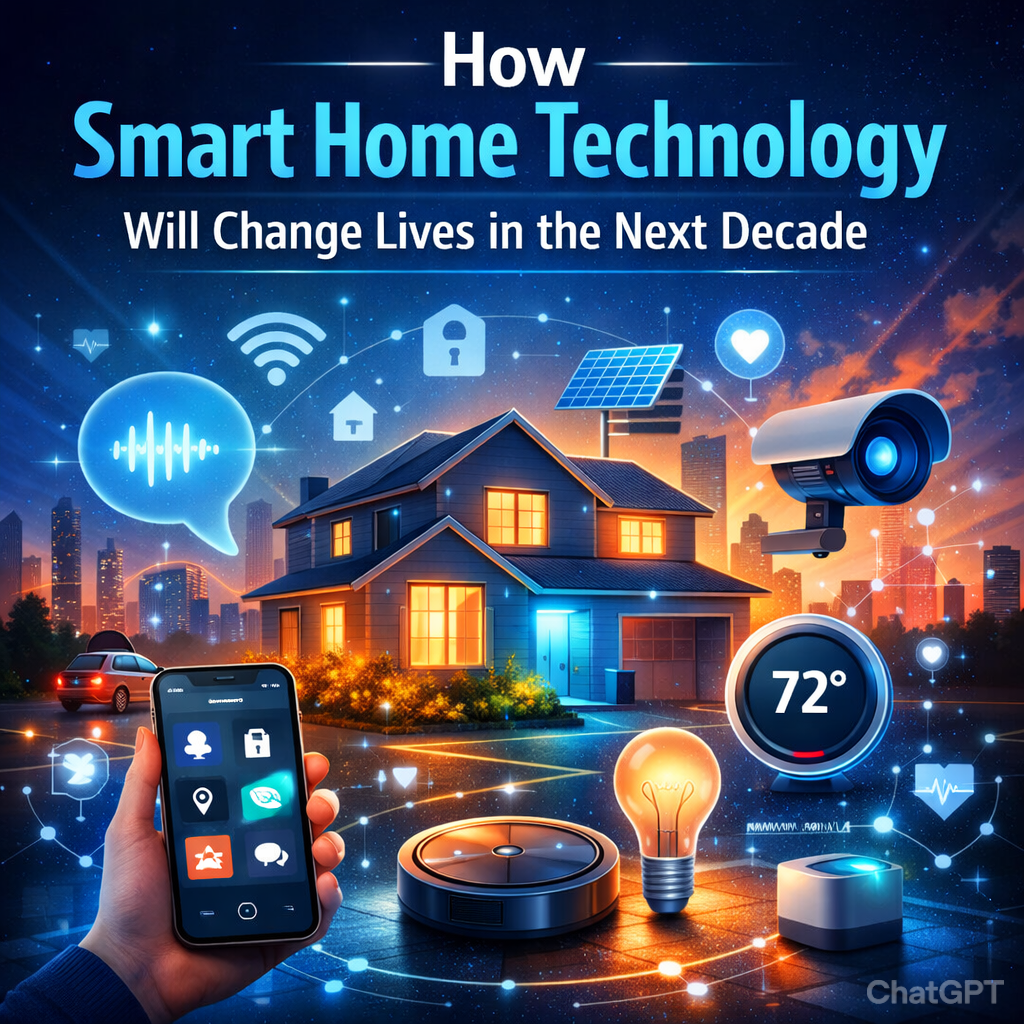
The rapid advancement of technology continues to transform the way we operate and exist. What people once thought was simply science fiction, such as voice assistants and smart appliances, are now commonplace in homes. As rapidly emerging technology continues to be introduced to the market, people are curious how smart home technology will revolutionize living in the next ten years. Innovations in comfort, security, health, energy efficiency, and convenience will answer all of the questions posed.
Smart technology in homes begins to be characterized as simply residential and not as luxury or high end. It will allow everyone to have through the fundamentals of easy and safe living.
The Foundation of Smart Homes: How Everything Connects
Smart home devices are able to communicate via the internet and are controlled using tablets, smartphones, or by voice using various home assistant AI technologies and devices, including Amazon Alexa, Google Assistant, and Apple HomeKit. Home lighting, thermostats, security systems, entertainment systems, and even kitchen appliances are interconnected and able to provide custom and unique solutions.
Automation is one of the important features of today’s smart homes. Smart devices can be controlled not just by people in real time, but by the devices themselves without any input from a user. Smart devices can be programmed to perform some actions based on user behavior such as a smart thermostat adjusting temperature based on prior user input or smart lights turning themselves on and off based on predetermined schedules or in response to user presence in the room. Smart home devices can be programmed to learn user preferences and adjust their actions accordingly.
Everyday Convenience That Saves Time and Effort
Smart home technology relieves routine work and makes life easier in the following ways:
- Time-sensitive automated light dimming
- Schedule learning smart thermostats such as Nest
- Voice assistants who remind, give weather briefings, and play songs
- Remote control smart devices
- Automatic opening and closing of smart curtains and blinds
Daily effort is spent less with these small conveniences, and homeowners are freed to concentrate on things more important than the manual work of repetitive tasks. Over time life is better with these smart devices as time and effort are saved.
Smart Security: A New Level of Safety and Peace of Mind
Homeowner’s primary concern is always security. With smart technology, protection of homes is getting major upgrades. These technologies allow device owners to protect homes by seeing who’s at the door from geographical locations. They even get alerted with real time notifications and smart plugs set to turn off and open the door to let visitors come.
Smart security is different from traditional systems because they offer instant notifications during an event. Parents can even monitor the security system and check in on the kids to ensure they are home during school hours and even while on vacation.
The most significant advantages of smart home technologies are the enhanced security and the peace of mind that come along with it.
Energy Efficiency and Cost Savings
Smart homes will help families save money and cut down on energy waste in their monthly bills:
- Saving energy and money by automating light switches and appliance timers
- Smart plugs that track energy consumption in real time
- Helios adaptive climate control that learns when to heat and cool
- Smart energy management with solar panels
- Usage analytics to pinpoint areas of improvement
Smart systems learn individual energy consumption patterns to operate exclusively when the demand is required. The environment also benefits as electric costs go down. Smart homes will provide a solution to climate change by offering homes that are easier to live in that also protect the earth.
As energy consumption is negative on a personal and global scale. Smart homes will change lives for the better and in a more efficient way.
Health, Wellness, and Independent Living
Smart home technology promotes healthy living. Air pollution detectors linked to home intelligent MPs activate air purifiers. Automatic smart lights mimic the sun making natural sleep cycles easier to achieve. Integrations with wearables give the entire home system access to a person’s heart rate, sleep cycle and activity data.
For elderly people smart homes mean greater independence and safety. Voice reminders for medication, fall detection and emergency alert systems allow elderly people to live without the burden of constant caregiver supervision.
As technology becomes available homes will begin to stop health risks and promote well living.
The Role of Artificial Intelligence in Personalization
Artificial intelligence is changing smart homes from being reactive to becoming predictive systems. Rather than respond to commands, smart homes will anticipate needs. For example, if your system knows that you typically get home from work at 7 PM, it will adjust the lighting and temperature to your desired settings before you even arrive.
TVs and sound systems can even make entertainment suggestions based on your viewing and listening patterns. Smart refrigerators will track how food supplies and suggest grocery lists. Virtually any appliance can pester the user with maintenance reminders and even suggest repairs before the device breaks down.
This level of personalization is the likely future of smart home technology. It will create truly smart environments that adapt to the needs of the people inside instead of the people having to adapt to the needs of their home.
Challenges and Considerations
There are challenges to smart home technology, in spite of its benefits. With hooked devices, data collection becomes an issue. They record sensitive data that are concerning to many. The strongest security measures and the most frequent software updates are necessary to address the concerns. Along with these, a stable internet connection to be able to utilize full functionality of hooked devices. While devices are getting cheaper with time, the investment needed for full smart home systems are still high.
Having said that, many obstacles are being addressed with increasing competition and advancing technology.
Conclusion
Smart home technology is more than a trend—it is defining the future of modern living. Being the forefront of digital transformation, understanding smart technology’s impacts is important. Smart home technology brings positive changes in the areas of convenience, security, energy efficiency, and even health.
Smart home technology will continue to evolve and become more intelligent and accessible. For tech trend updates and innovations, Ghostear is a reliable source. Follow Ghostear to learn about the tech innovations impacting your everyday life.